
Ready to finish your basement? While there may be many decisions to make about design and decor, one of the most important choices you’ll need to make is which basement flooring option is best for your basement.
This is an important decision because your flooring not only affects the look of your basement, but it also needs to be suitable for how you plan to use the space. This blog will serve as your ultimate guide to basement flooring. We’ll discuss different kinds of basement flooring, what to consider when choosing the best flooring option for your needs, and which ones to avoid altogether.
What Makes Choosing Basement Flooring Complicated?
Unlike above-ground rooms in a home, basements have unique challenges. They are usually underground, making them naturally dark spaces that are prone to moisture and humidity. If flooding occurs, there’s a high chance that mold will grow and the materials in your basement will deteriorate. That’s why it’s important to have waterproof basement flooring.
The temperature in basements tends to fluctuate, particularly if your basement is not well insulated. Materials that are sensitive to temperature changes will expand and contract, which can create an uneven floor surface and other damage.
First Things First – What to Do Before Installing Flooring for Basement
Before installing a new floor in your basement, you need to make sure that your basement is properly waterproofed with interior and exterior waterproofing to protect your basement from water damage. Another thing to check is whether the subfloor is in good condition and ideal for the type of flooring you want to install. The subfloor is the bottom layer of flooring (concrete floor). However, flooring manufacturers use the term subfloor (also called underlayment) when referring to the layer of material sandwiched between the concrete slab and the finished floor that provides insulation and protects against moisture.
These manufacturers require a specific type of subfloor to be installed under their product to honour warranties on their flooring products. If the type of flooring you want requires this, it’s best to install the underlayment required.
What Flooring is Best for Basements?
What you should be looking for when it comes to basement flooring are floors that consist of materials that are moisture friendly. These are referred to as “below grade” flooring. When we think of the term “below grade” we may assume it means something that is substandard, but this is not the case. It just means that the flooring is made from hard materials and not fabric like carpet.
Thankfully, there are loads of flooring options on the market that are suitable for basement floors. You can get just about any look you want.
Here’s what to look for when shopping:
- Below-grade flooring – The basement flooring you choose must be moisture-friendly and labelled as “below-grade” flooring, meaning that it is suitable for areas in your home that are underground.
- Inorganic materials – Choose flooring that consists of inorganic materials. These are naturally resistant to mold and mildew, durable, and easier to clean.
- Monolithic – This means that the flooring consists of a single layer and can dry quickly. Multi-layered flooring tends to easily trap water, potentially leading to a myriad of water damage issues for your basement.
Popular Basement Flooring Options
Rubber Flooring
Rubber makes an excellent flooring, particularly for home gyms and workshops, because rubber is impact-resistant. It’s also a good choice if you plan to use your basement as a play area, as it can withstand frequent use and has excellent shock absorption. It is comfortable, easy to install, and easy to clean and maintain.
Engineered Hardwood Flooring
Engineered hardwood flooring is a durable choice for basements, available in a wide range of plank widths, finishes, and stain colours to suit any style. Its layered construction offers strength and stability, while handling moisture and temperature changes better than many traditional flooring options.
Ceramic and Porcelain Tile
These types of tiles are water-resistant and highly durable, making them perfect flooring for basements. They come in a variety of colours, patterns, and sizes, and their water-resistant nature makes it impossible for mold and mildew to grow on them. Another great benefit to these is that the installation process is straightforward.
Luxury Vinyl Plank (LVP) and Tiles
Waterproof vinyl flooring for the basement is a definite yes! Vinyl sheet flooring has been on the market for a long time, now you can get it in planks and tiles. These come in a wide range of colours and paints and can look like hardwood or ceramic tiles. These are installed as floating flooring, and an added plus is that you can add heating to this flooring.
Finished Concrete Flooring
Concrete slab with a beautiful finish can create a stunning floor for your basement, particularly if you use your basement as a workspace or studio. It is inexpensive, and you can customize the flooring with staining that suits your preference. Concrete is easy to clean and highly durable. The downside is that it is a cold surface.
Epoxy Flooring
This is another top choice that many homeowners go for. Epoxy flooring offers extreme durability, no seams or joints. Customize your epoxy design in a variety of colours. It is low maintenance, waterproof and resistant to mold and mildew.
Natural Stone
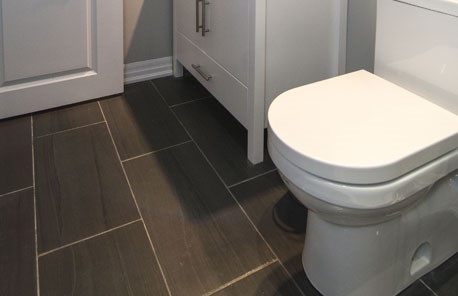
Natural stone may be hard and cold, but it is a good basement flooring option when treated with a sealant. It is water resistant, and when sealed, it becomes waterproof and stain-resistant. Natural stone gives your basement a unique and luxurious look. It’s easy to maintain and can be textured to become slip-resistant.
Floating Floors
A floating floor is not glued or nailed to the subfloor. In essence, the tiles are floating and allow for a moisture barrier to sit between the floor slab and the floating floor. Cork flooring, engineered hardwood, laminate, sheet vinyl, and luxury vinyl tiles fall under this category.
Flooring to Avoid in Your Basement
Now that we’ve discussed the materials that are best for your basement, let’s look at some that are a bad idea for any basement.
- Solid Hardwood – Wood does not tolerate moisture well. As a natural material, it provides a perfect breeding ground for mold when it is exposed to moisture.
- Laminate – While great for other areas of a home, laminate has a fiberboard core, which absorbs moisture and causes the floor to warp or swell, and leads to the growth of mold.
- Carpet – Carpet is a poor choice for basements because it can trap moisture and create a damp environment that is prime for mildew and mold growth.
Before You Begin
Regardless of the flooring option you choose, it’s important that you prepare the concrete subfloor adequately before installing the new floor. This involves cleaning, leveling, assessing the dryness and making sure the floor is in good condition.
Basement Subfloor Options
DRICore Subfloor
Pros – great choice for basements with low ceilings, comes with a moisture barrier.
Cons – more expensive than plywood flooring.
Cost – about $6.43 per panel or tile.
Osb Subfloor
Pros – creates a smooth floor and a fresh, clean look.
Cons – does not hold up well in moisture.
Cost – approximately $6 per sheet.
Plywood Subfloor
Pros – low cost and durable.
Cons – tends to splinter and is weakened by moisture.
Cost – $700-$100 to install.
Tongue and Groove Subfloor
Pros – extremely durable and can easily be fitted in any basement.
Cons – repairing the floor can be difficult because the floor panels or planks are glued together
Cost – a 4×8 sheet costs anywhere from $30-$50.
To Conclude
When choosing the best flooring for basement, focus on materials that handle moisture well, are easy to maintain, and suit the intended use of the space. Whether you want a cozy family room, home gym, home office, or kids’ play area, there’s a flooring option that fits both your budget and needs.
Start with waterproofing, inspect your subfloor, and invest in the right materials. The right flooring can turn your basement into your favourite space in your home!
FAQs
What is the cheapest way to finish a basement floor?Epoxy flooring is the cheapest flooring option.
Should I seal my basement floor?Yes. Always seal the concrete floor in your basement with a moisture barrier primer sealer or paint.
Do I need a subfloor in my basement?Subfloors are not a necessity but they are a good idea if you want to make your basement space warm.
Do I need vapor barrier under carpet in basement?Yes. This will keep your flooring dry and free of mould and mildew.
What is the best flooring to put over concrete?Ceramic tile offers many benefits, is moisture resistant and comes in many colours and styles.
Want to see these ideas built? Browse more basement ideas: photographs of basements we finished, room by room.